


A few weeks after I filed for divorce, I stood before my philosophy class lecturing on Plato. The students listened. The chalk squeaked. Everything appeared ordinary.
Inside, I was dying.
A wave of grief hit me mid-sentence—so powerful it stole my breath. My throat tightened, my eyes blurred, and I excused myself. I walked into the hallway, slipped into the men’s room, shut the door to the last stall—
—and collapsed on the cold tile floor.
I wept like a child.
I know, I know its not the cleanest place, but feel so dirty inside and empty.
For the marriage I could not save.
For the children I could no longer tuck in at night.
For the man I believed I had failed to become.
For the wife I thought I failed at the time.
There is a loneliness that feels like burial — like hell.
Later I would learn the horrifying statistics that describe this tomb:
Men die by suicide four times more often than women (CDC).
Recently divorced men are 2.8–4.1 times more likely to die by suicide compared to married men (American Journal of Epidemiology).
Those are numbers.
On that bathroom floor, they were my pulse.
And the pain deepened when my young children—too small to understand the complexities of adult heartbreak—learned to hesitate around me.
They called me a monster even though i never gave them a reason to.
Children don’t interpret; they imitate. Seeing my children pause before running into my arms introduced me to a new species of grief.
After thousands of dollars in legal fees to just spend time with them, and after a year of that, I found that they hate me for some reason.
It was in that pit, not in a church service or a book or a lecture hall, that I discovered something essential:
Loneliness kills.
But solitude rebuilds.
And confusing the two nearly ended me.
The Loneliness Robin Williams Knew

The death of Robin Williams in 2014 shocked the world. How could a man who made millions laugh, who brought joy to entire generations, lose hope so completely?
Neurologically, the answer is brutal.
Functional MRI studies show that a depressed brain is one trapped in self-referential overthinking — the “default mode network” stuck in hyperdrive (Greicius et al., PNAS). Without relational interruptions, the mind becomes a hall of mirrors.
Too much attention turned inward becomes a kind of self-imposed solitary confinement.
Loneliness narrows consciousness until the self collapses in on itself.
Robin Williams could fill stadiums with laughter, but like so many men, he could not always escape the locked room of his own mind.
Loneliness is not the absence of people.
It is the absence of connection.
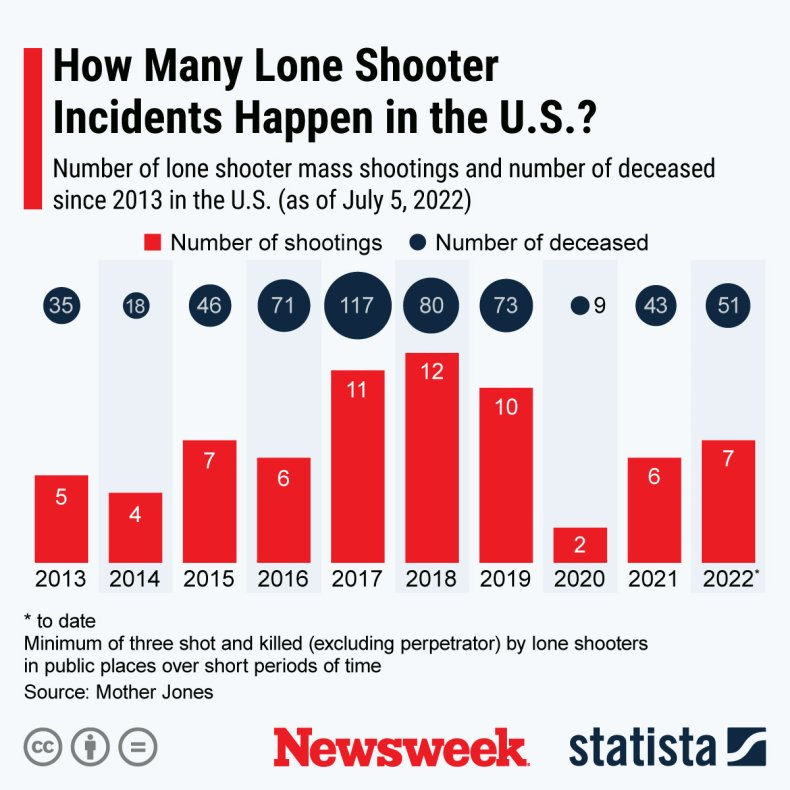
The One Dark Thread Every Shooter Shares: Isolation
There is another place where this truth shows up — quietly, consistently, and tragically — in nearly every mass shooting we read about. Strip away the politics, the headlines, the arguments about guns, upbringing, and ideology, and one pattern remains with chilling clarity: every single one of these young men was profoundly, catastrophically alone. Not just introverted — isolated. They lived in the psychological basement of the human condition, alienated from family, peers, mentors, faith communities, and any form of life-giving belonging.
Researchers at the Violence Project — the most comprehensive study of mass shooters in America — found that the common denominator is not race, not income, not even ideology. It is early childhood trauma followed by chronic isolation. These young men were invisible long before they became dangerous. They were unheard long before they were violent. And in their loneliness, resentment metastasized into nihilism. Their final act of destruction is not simply an attack on others — it is a last, violent scream into a universe they believed had forgotten them. The tragedy is that what they needed most was what every human being needs: connection, purpose, and someone to tell them they matter. When God said “It is not good for man to be alone,” He was not offering a quaint proverb; He was describing the fault line that, when it cracks, can swallow a soul whole.
Loneliness vs. Solitude: The Philosophy You Were Never Taught

Philosophers and psychologists insist on the distinction:
Loneliness is emotional exile.
Solitude is a chosen sanctuary.
One suffocates.
The other strengthens.
Arthur Schopenhauer wrote that solitude is where the mind sharpens itself.
Ben Lazare Mijuskovic calls loneliness “the universal and necessary condition of self-consciousness”—we become aware of ourselves and of our separateness.
But Christianity says something deeper:
God Himself has never been alone.
The Trinity—Father, Son, and Holy Spirit—is eternal communion.
You long for connection because you were made in the image of a relational God.
No wonder isolation feels like death.
No wonder solitary confinement drives prisoners insane.
No wonder modern people, glued to screens, feel an ache no algorithm can soothe.
Hell, in the Christian imagination, is this ache made eternal.
Not fire.
Not torture chambers.
Not medieval artwork.
Hell is the complete severing from God—the only source of love, meaning, and relational life.
Hell is perfect loneliness.
Hell is isolation with no end.
And too many are giving themselves a taste of it every night.
Even God Knows the Feel of Loneliness
Here lies the paradox at the heart of Christianity:
God is never alone.
But Christ felt abandonment.
On the cross, Jesus cried:
“My God, my God, why have You forsaken Me?”
This is not metaphor.
This is not theater.
This is the eternal Son experiencing—
in His humanity—
the desolation of God-forsakenness.
Why?
So that when you collapse on your bathroom floor,
you are crying out to Someone who has been there.
He does not merely understand loneliness conceptually.
He walked into the deepest loneliness so you would never face yours alone.
Jordan Peterson, Rule 2, and the Moral Obligation to Stop Drowning
Jordan Peterson puts it with clinical precision in 12 Rules for Life:
“You have a vital role to play in the unfolding destiny of the world.
You are, therefore, morally obligated to take care of yourself.”
And again:
“You should take care of, help, and be good to yourself the same way you would take care of, help, and be good to someone you genuinely loved.”
His observation on self-neglect is damning and true:
“People are better at filling prescriptions for their dogs than for themselves.”
Loneliness often thrives in those who believe they are unworthy of tending.
But Peterson turns that lie inside out:
“You must treat yourself as if you were someone you are responsible for helping.
You have something to offer the world that no one else can.
And the way you treat yourself will either enable or hinder that.”
Self-care is not luxury.
Self-care is duty.
You are morally obligated to save your own life.
The Avengers and Losing together
People joke about superhero movies.
But sometimes, buried beneath explosions, Hollywood accidentally whispers a doctrine older than time.
In Avengers: Age of Ultron, as a city floats toward annihilation, Tony Stark turns toward Steve Rogers and asks:
“How are we going to survive this?”
This is the cry of the lonely:
How do I make it through this?
How do I survive what’s happening inside me?
Steve answers:
“Together.”
Tony fires back with despair’s logic:
“We’ll lose.”
And then Steve steps closer—no hesitation, no fear, no cheap optimism—and delivers one of the most theologically accurate lines ever spoken in cinema:
“Then we’ll do that together too.”
This is covenant.
This is the Trinity.
This is the Church.
This is the Gospel in blue spandex.
Steve’s promise echoes God’s promise:
You will never face this alone.
Not even if you lose.
Not even if the sky falls.
That line saved millions on screen.
It saved me off screen.
Not because it promised victory.
But because it promised presence.
The Hardest Question: Why Are You Still Reading This?
You’ve made it this far.
You’ve inhaled theology, neuroscience, philosophy, Peterson, Robin Williams, the Avengers, loneliness, hell, divorce, God-forsakenness, and redemption.
But now I have to ask you something that might save your life:
So why are you still reading this?
You don’t need another paragraph.
You need a person.
You need a room with another heartbeat in it.
You need a handshake, a hug, a laugh, a shared table, a voice that isn’t coming through a glowing rectangle.
Scrolling will not save you.
You cannot outthink loneliness.
You cannot algorithm your way into community.
So here is your prescription, written with love and a holy impatience:
Put your shoes on. Walk outside.
Text someone, even if it feels awkward.
Call the friend you keep avoiding.
Join any group:
A gym
A Bible study
A philosophy meetup
A running club
A pottery studio
A pick-up basketball game
An underwater basket-weaving class.
(Yes, that’s a real thing. If not, start one.)Read a real book.
Volunteer somewhere.
Pray. Not perfectly—honestly.
Say yes to coffee.
Say yes to life again.
Because solitary confinement is a punishment you should stop voluntarily imposing on yourself.
You were not made for this isolation.
You were engineered for communion—
with God and with others.
So here is your benediction, your shove out of the cave, your Captain America moment:
Stop reading this.
Get up.
Go live.
And if you fall?
If you lose?
If the world collapses?
Remember Steve Rogers’ theology:
“Then we’ll do that together too.”
Now go.
You were not made to be alone.
—Why are you still reading? 🤪
-