


What They Do Not Tell You About Heaven
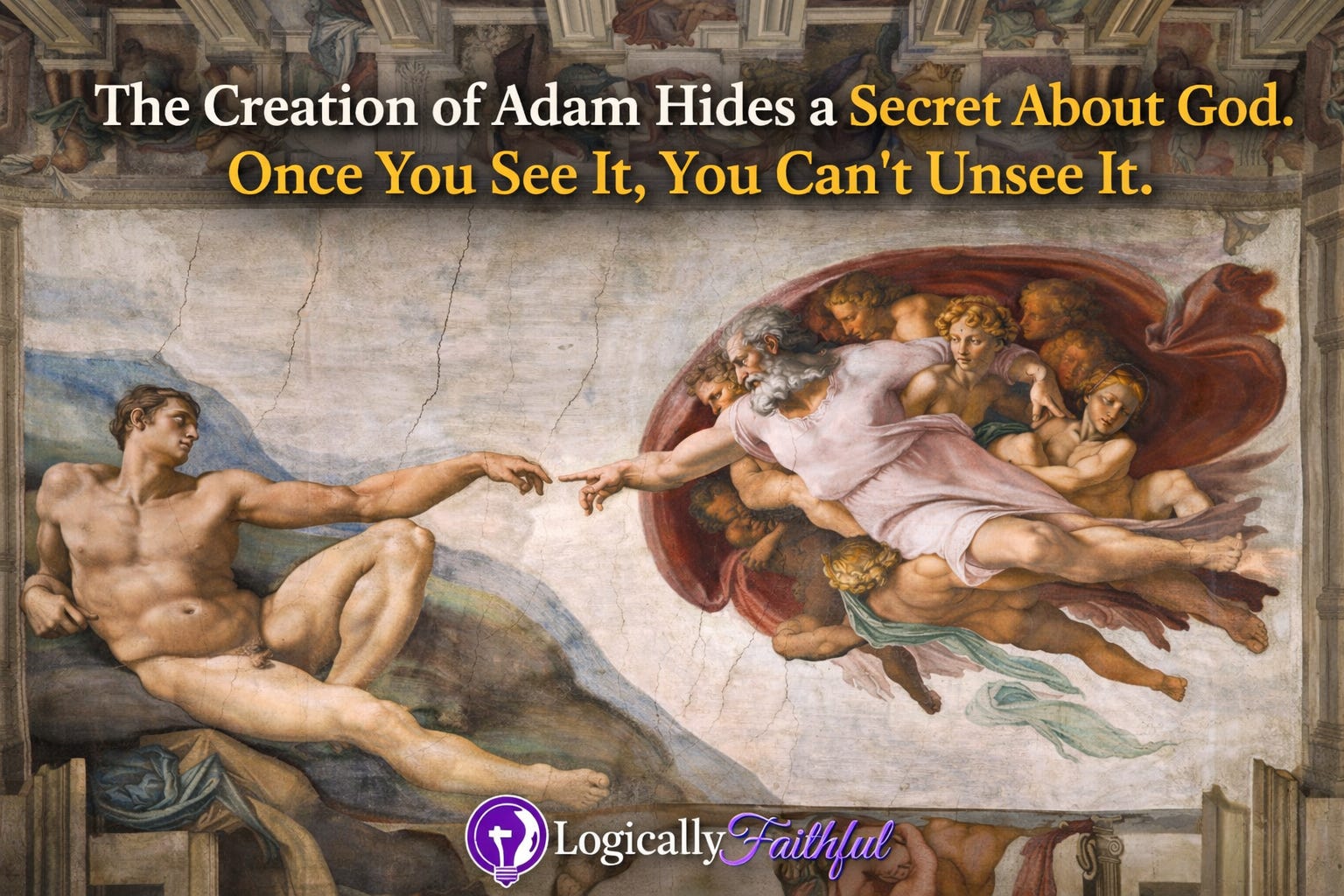
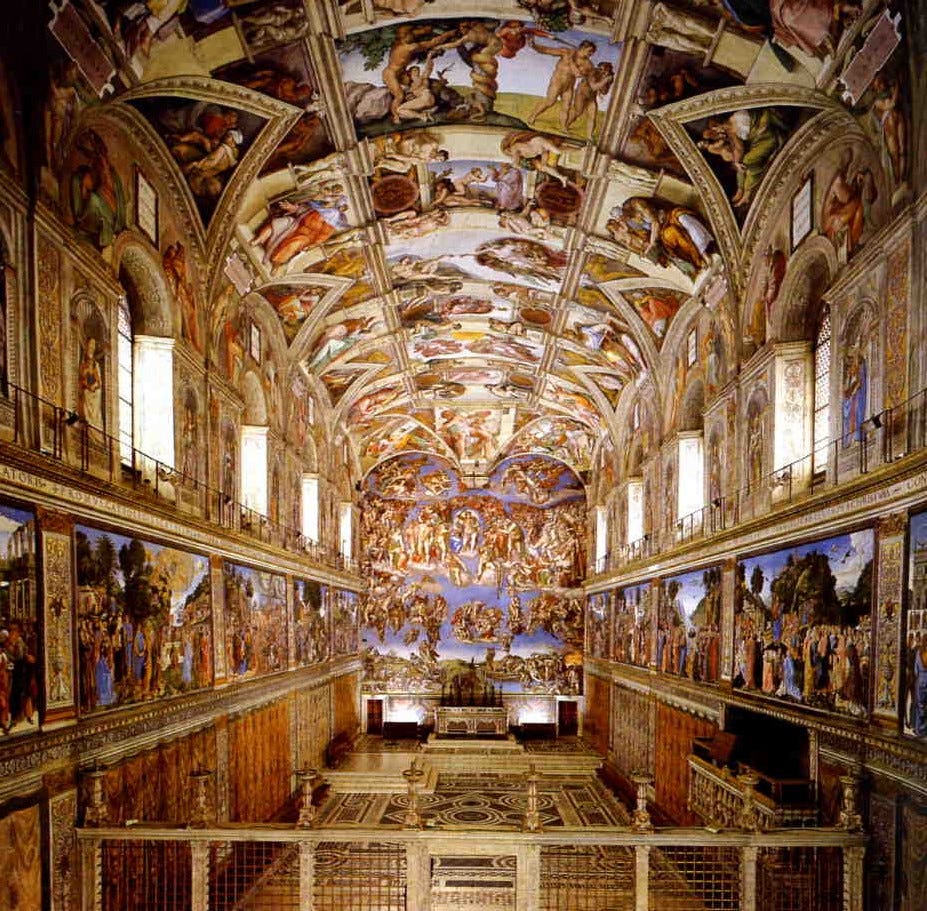
In 2018 I stood beneath the ceiling of the Sistine Chapel in Rome, craning my neck like millions of visitors before me, trying not to look like a tourist while simultaneously behaving exactly like one.
Everyone eventually does the same thing in that room.
They look up.
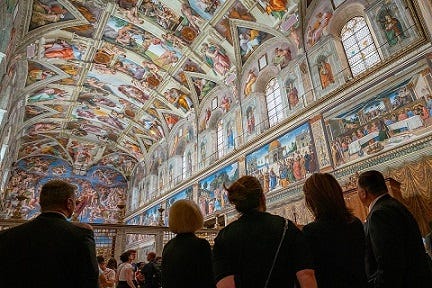
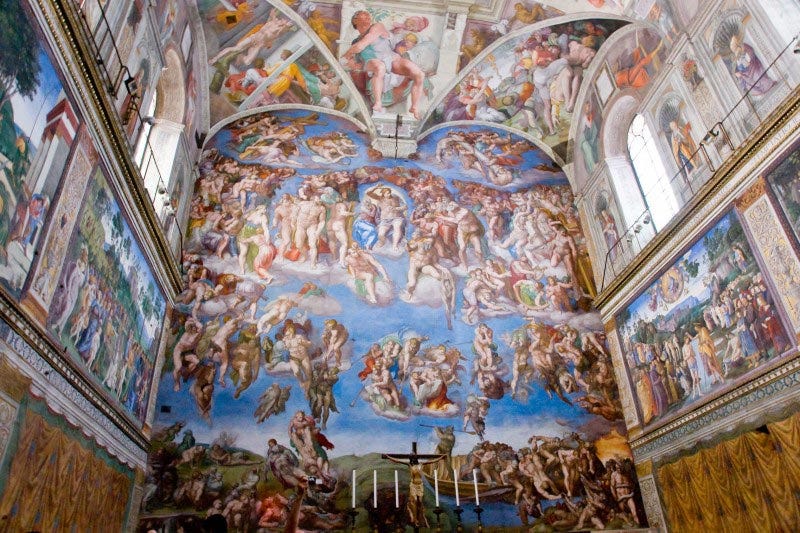
And when they do, they encounter one of the most famous images ever painted by human hands: The Creation of Adam, painted by Michelangelo more than five hundred years ago.
But what struck me that day was not merely the beauty of the painting. It was something else. Something almost mischievously brilliant.
Look closely at the shape surrounding God. The red cloak encircling Him and the angels appears to form the exact cross section of a human brain.
Once you notice it, the image becomes impossible to ignore. The curved cerebrum. The outline of the brain stem. The folds and contours that resemble the anatomy of the mind itself.
Michelangelo had studied human anatomy obsessively. Renaissance artists often dissected corpses in order to understand the human body. Michelangelo certainly did. He knew what the brain looked like.
Which raises a delicious possibility.
Perhaps this was not accidental.
Perhaps Michelangelo was embedding a philosophical claim in paint.
God Gives Adam More Than Life
If the brain shape is intentional, the symbolism becomes breathtaking.
God is not merely giving Adam biological life. He is giving Adam mind.
Reason. Consciousness. Self awareness. The mysterious inner life that philosophers still struggle to explain.
In the language of the Book of Genesis, God breathes life into the dust and humanity awakens. Michelangelo translates that moment visually. The divine spark that leaps between the fingers is the birth of human intellect.
The Creator gives not only existence but understanding.
Standing beneath that ceiling in 2018, I realized Michelangelo may have painted one of the greatest philosophical arguments in history without writing a single sentence.
Look Carefully at the Hands
But there is another detail that often escapes casual observers.
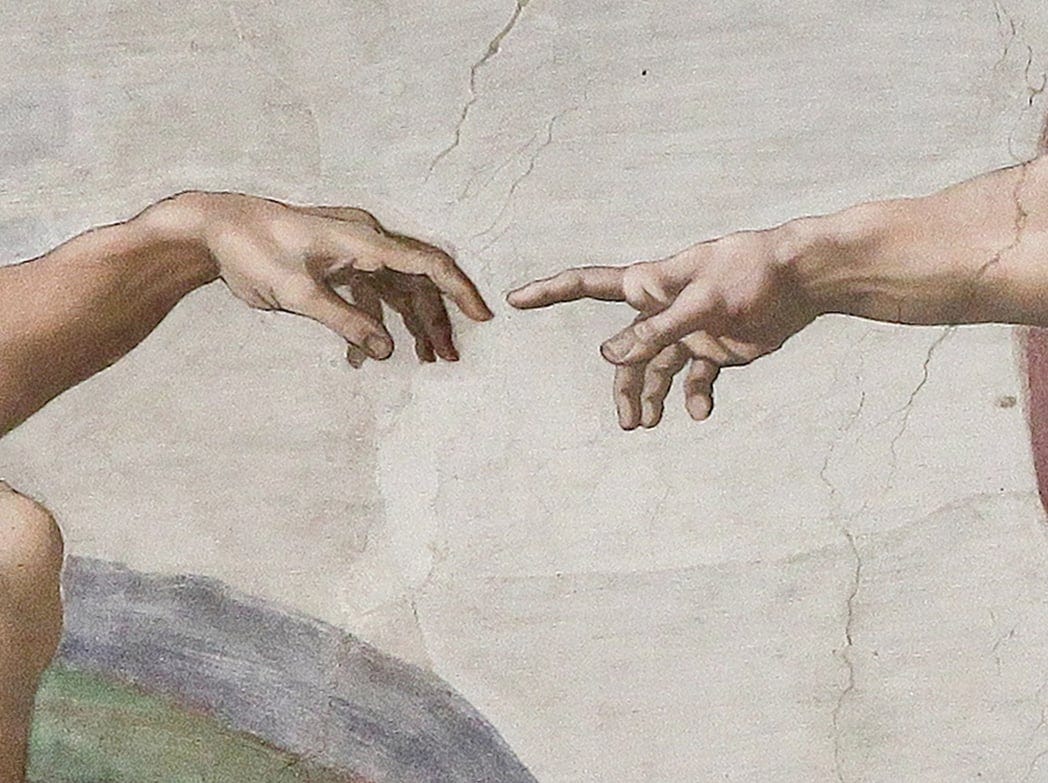
Adam is relaxed, almost languid. His arm drapes loosely over his knee. His finger extends outward, but only barely, as if he is half asleep.
God, however, is in motion.
His arm stretches forward with energy and purpose. His finger reaches outward, closing the distance between Creator and creature.
The initiative clearly belongs to God.
This is not humanity climbing toward heaven.
It is heaven reaching toward humanity.
The difference matters.
Many religious systems picture human beings striving upward toward a distant and demanding deity. We climb moral ladders. We accumulate merit. We attempt to impress a cosmic judge.
Michelangelo paints something entirely different.
God is the one seeking.
God is the one reaching.
God is the one closing the gap.
The human being lies there almost passive, not yet fully awakened, waiting for the spark that only God can provide.
A Quiet Theological Revolution
What Michelangelo captures in that tiny space between the two fingers is one of the central claims of Christianity.
Humanity does not ultimately find God through its own cleverness or moral effort.
God finds us.
The initiative belongs to the Creator.
The God who judges the world is also the God who pursues it. The God who created the mind is the God who reaches toward it.
In that sense, the painting contains both anthropology and theology.
It shows us who we are.
And it shows us who God is.
The Irony of an Unwanted Assignment
There is another layer of irony behind the masterpiece.
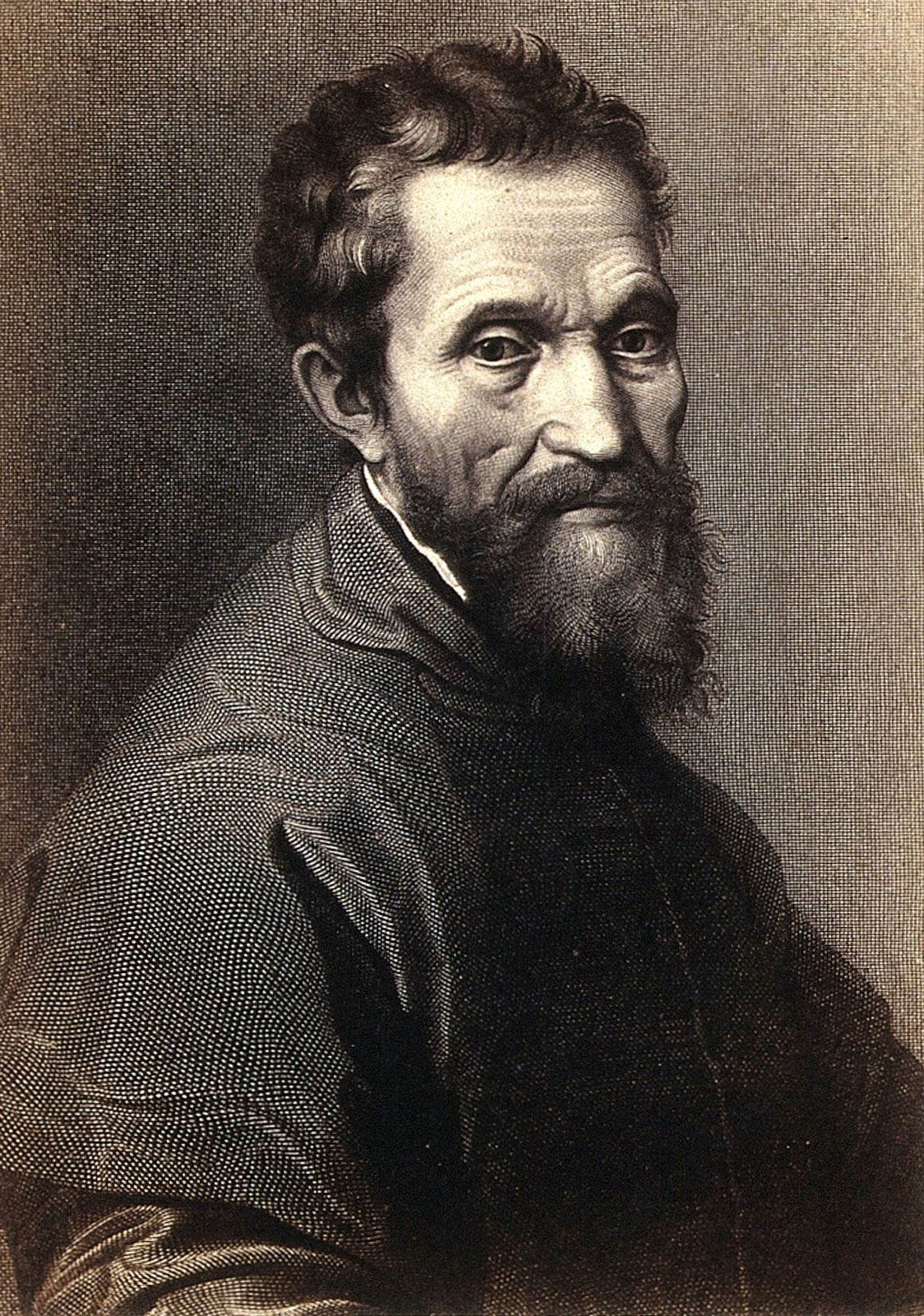
Michelangelo never wanted to paint the ceiling.
When Pope Julius II ordered the project in 1508, Michelangelo protested that he was a sculptor, not a painter. He even suspected that rival artists had recommended him for the task in hopes that the project would destroy his reputation.
For four grueling years he stood on scaffolding high above the chapel floor, his neck bent upward, paint dripping into his eyes, his body twisted with pain. In one of his poems he described his back as bent like a bow and his beard pointing toward heaven.
The work nearly broke him.
Yet that unwanted assignment produced one of the greatest works of art in human history.
The Ceiling That Still Speaks
When I walked out of the Sistine Chapel that day in 2018, I realized something profound.
Sometimes the work we resist becomes the work that defines us.
Michelangelo believed he was being set up to fail.
Instead he created an image that has spoken across five centuries. Millions still walk into that chapel, lift their eyes upward, and stare at the small gap between those two fingers.
Some see art.
Some see theology.
I saw wonder.
And if you look closely enough, some see a human brain floating around God Himself.
Which may be Michelangelo’s quiet reminder that intellect, consciousness, and creativity are not accidents of chemistry.
They are gifts.
And the story told on that ceiling is not merely about humanity searching for God.
It is about God reaching you first.