

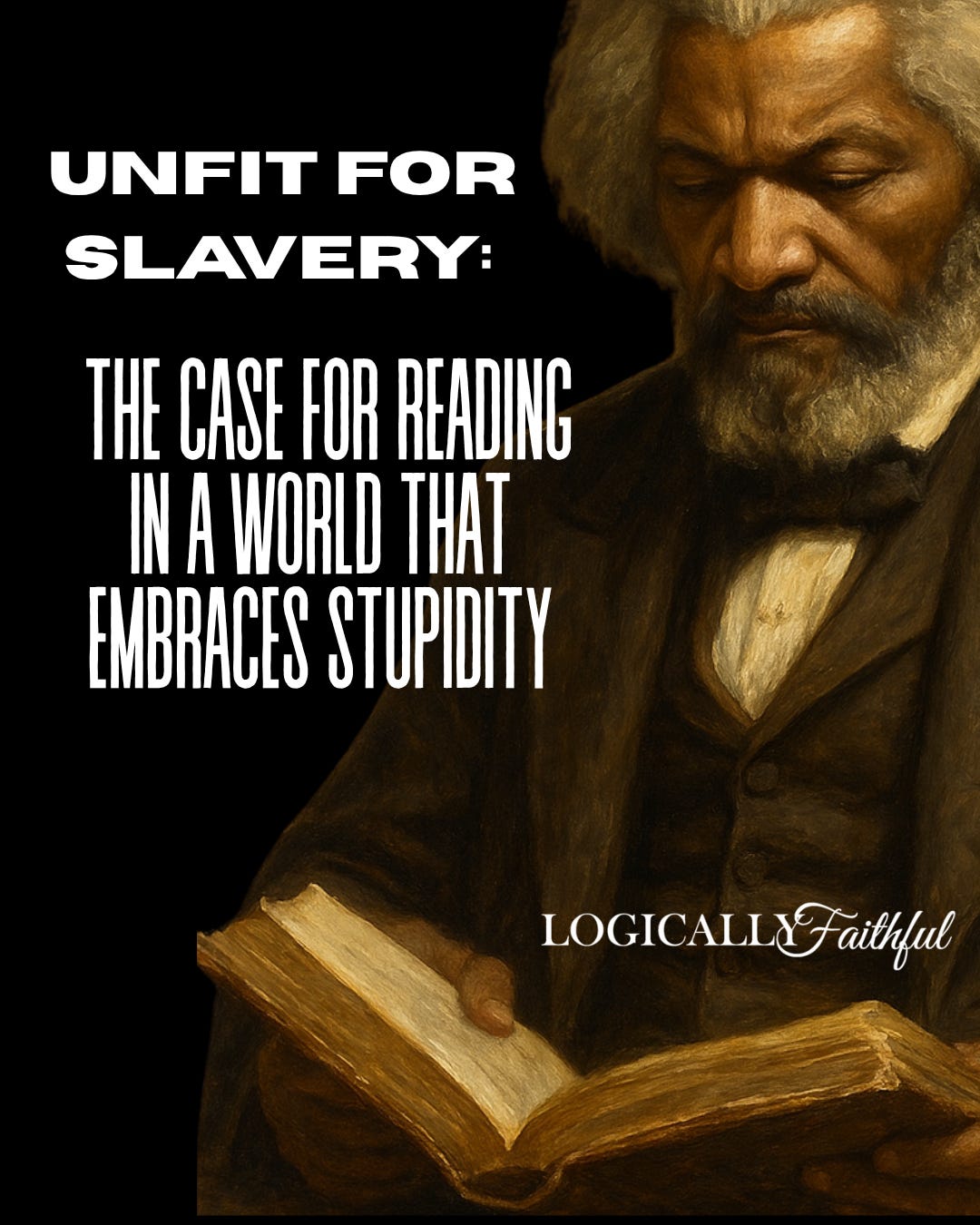
Before he was a bestselling autobiographer, before presidents sought his counsel, Frederick Douglass did something almost unthinkable for his era: he became the first formerly enslaved American ever nominated for the vice presidency of the United States—placed on the Equal Rights Party ticket in 1872 with Victoria Woodhull. The nation did not recognize the bid, but the audacity of that moment remains electric: a man once treated as property elevated to a national ticket. It was a political lightning strike that rewired public imagination
He mastered not just words but light itself. Frederick Douglass became the most photographed American of the nineteenth century—more than Lincoln, more than Twain—sitting for over 160 portraits, each one a declaration: I exist. I am human. I am free.
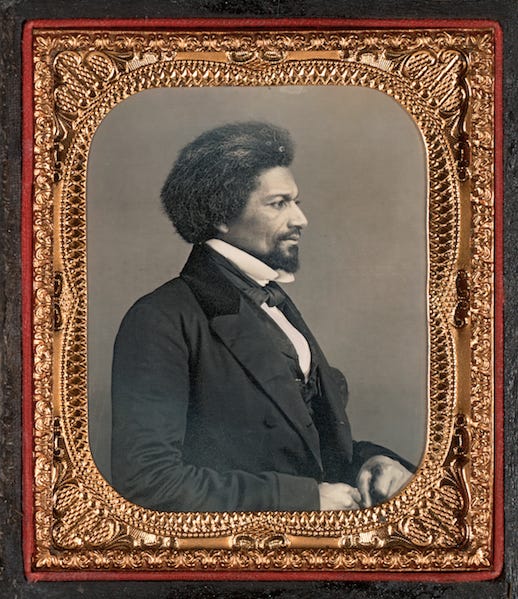
And this was no casual click of a phone. In Douglass’s day, a photograph was an ordeal. The daguerreotype demanded minutes of stillness beneath blinding sunlight or the heat of chemical lamps. You could not blink. You could not tremble. Your head was often locked in an iron brace while silver plates, drenched in mercury vapor, drank your image grain by grain. Every photograph was a small crucifixion of patience and will.
He sat unsmiling, unbent—because a single portrait might outlive the century, might stare down a world that still saw Black bodies as property. In that stillness, Douglass waged a visual revolution. His portraits became sermons. His gaze, a theology of human dignity.
Today, we take more photos in a weekend than most people in his time saw in a lifetime. Our devices freeze time in 1/1000th of a second, and yet our images evaporate as quickly as we post them. Douglass’s portraits demanded endurance; ours demand nothing. His images carried soul; ours chase likes.
He didn’t just pose for a camera—he preached to it.
In an age before social media, he engineered a visual campaign against racist caricature and won.
But before the portraits and politics, there was a book that lit the fuse: The Columbian Orator. In its speeches and dialogues, the young Douglass found arguments sharp enough to cut through chains—proof that truth, spoken boldly, can bend history.
But his slave master’s wife taught him the alphabet, and everything changed.
Douglass was born into a world designed to erase him. Around 1817, in Talbot County, Maryland, he entered a system that counted human beings as livestock and labeled ignorance as virtue. Enslaved people weren’t given birthdays. They weren’t supposed to need them. He was denied even the most basic coordinates of identity—who he was, when he was born, and to whom he belonged.
His childhood was baptized in horror. One of his earliest memories was watching his Aunt Hester whipped until her blood ran onto the floor.
He wrote later, “It struck me with awful force. It was the blood-stained gate, the entrance to the hell of slavery.”
The Alphabet That Broke the Chains
And yet—one act of grace split the darkness.
At eight years old in Baltimore, Sophia Auld, not yet hardened by the customs of slaveholding, began teaching him the alphabet. Each letter was a spark. Each word, a window. Each sound, a sword.
When Hugh Auld discovered the lessons, he forbade them: education would make the boy “unfit to be a slave.” He was right. Because once you know the word, you can no longer worship the chain.
Douglass taught himself in secret—trading bread for reading lessons, copying letters from shipyards, memorizing scraps from newspapers and Bibles. The alphabet became his Exodus. “The more I read,” he wrote, “the more I abhorred and detested my enslavers.” Education didn’t make him ungrateful. It made him alive.
The Danger of Reading
Slave owners feared books the way tyrants fear truth. To teach an enslaved person to read was to hand them a mirror—to awaken the terrifying possibility that they were not property but persons, not beasts of burden but bearers of reason and soul. Reading cracked open the world. A Bible could whisper that Pharaoh’s power is not forever; a newspaper could expose the lie that bondage was destiny. That is why slave codes across the South made literacy a crime punishable by whipping, mutilation, even death. A literate slave was dangerous because a literate mind could no longer be ruled. You can cage a body, but you cannot enslave an imagination once it learns the alphabet.
Today, the tragedy has inverted. No law forbids us from reading—yet many live as though one does. The plantation has been replaced by the platform; the overseer’s whip by the algorithm’s scroll. We are free to read anything, and so we read nothing. We numb our minds with endless videos, our souls with flickering noise, and call it “staying informed.” The power that once terrified oppressors—literacy, reflection, independent thought—is now willingly surrendered for the dopamine drip of distraction. The chains have changed shape, but not purpose: to keep the mind too busy to awaken.
The Power of a Page
On September 3, 1838, disguised as a sailor and carrying seaman’s protection papers, Douglass slipped the net and reached New York. “I felt like one who had escaped a den of hungry lions,” he said. Paper and ink opened a door where there had been only walls.
Freedom was peril, not peace. Slave catchers hunted. The law stalked. But then he found The Liberator, and reading lit the fuse a second time—this time toward public service. He wrote. He thundered. He toured Britain, where allies purchased his legal freedom so he could return to America untethered and fight in the open.
He became a prophet armed with pen and purpose, an advisor to presidents, a relentless voice for abolition and equal rights. The boy forbidden to read became a man the world could not silence.
The New Illiteracy
“Once you learn to read, you will be forever free,” Douglass said.
But today, freedom is traded away—not by whips or chains—but by apathy. The tragedy of our age is not that people cannot read, but that they choose not to.
We scroll instead of study.
We react instead of reflect.
We binge distraction in place of discipline.
The plantation has been replaced by distraction. The overseer’s whip has become the algorithm. Our chains are invisible and voluntarily worn. Ignorance has gone digital—and comfort has replaced curiosity.
The Forgotten Miracle of Reading
The screen flatters us. It gives us the illusion of knowledge without the labor of learning. It entertains our emotions but leaves our souls untrained. The modern mind spends hours consuming pixels, mistaking information for wisdom, motion for progress, and stimulation for understanding. But a thousand hours on a screen will never equal a single hour alone with a good book.
Why? Because when you read, you become like someone else or better, you learn to think like them…thus you become a better person.
Reading is not passive observation—it is power.
The author’s mind enters yours; his eyes become your own. You think his thoughts, feel his fears, love what he loves, rage at what he hates. Through words, two souls fuse across time.
When you read Plato, you are sitting beneath the olive trees of the Academy, listening as Socrates asks the questions no one else dares.
When you read Shakespeare, you are standing backstage at the Globe, watching the world wrestle itself to laughter and tears.
When you read Austen, you learn subtlety; when you read Dostoevsky, you confront madness; when you read Lewis or Chesterton, you spar with wit that makes eternity feel close enough to touch.
And when you read Douglass, you feel the burning hunger of a man who learned that letters can tear down walls higher than any prison.
Reading is time travel for the soul. It allows the dead to mentor the living. You commune with immortals.
You share coffee with Aristotle, argue with Nietzsche, pray with Augustine, and walk with Douglass through streets still lit by his courage. Books are burning bushes that speak—if only you will take off your shoes and listen.
Screens, by contrast, do not mentor us; they measure us. They feed us what we already think, reflect our biases back at us, and numb the very faculties that reading refines: imagination, attention, and moral discernment. The glowing rectangle has become the modern shrine—worshiped at dawn, consulted before sleep—its gospel scrolling endlessly but never saving anyone.
When you scroll, you consume.
When you read, you contemplate.
When you scroll, your attention fractures.
When you read, your soul expands.
A book does not beg for your attention—it trains it. It asks you to slow down, to linger, to reason. That’s why tyrants burn books but subsidize screens. One cultivates independent thinkers; the other creates distracted consumers.
Reading teaches empathy by incarnating the other. You don’t just learn about courage—you feel it in the marrow as Douglass risks his life for literacy. You don’t just define justice—you agonize with Socrates as he drinks the hemlock. You don’t just read ideas—you live them.
The act of reading itself is moral formation. It requires patience, humility, endurance—the very virtues that screens erode. Every page you turn is resistance against the attention economy that profits from your distraction. Every chapter you finish is a declaration that your mind still belongs to you.
Frederick Douglass risked his life for a word.
We can risk ten minutes without a notification.
So put down the device and pick up the book.
Sit with the dead—they are wiser than most of the living.
Let your mind stretch until it aches.
Let your imagination resurrect what the world has forgotten.
Because when you read, you are not merely learning—you are remembering who you were meant to be.
And that—always—that is what makes a person truly unfit for slavery.