


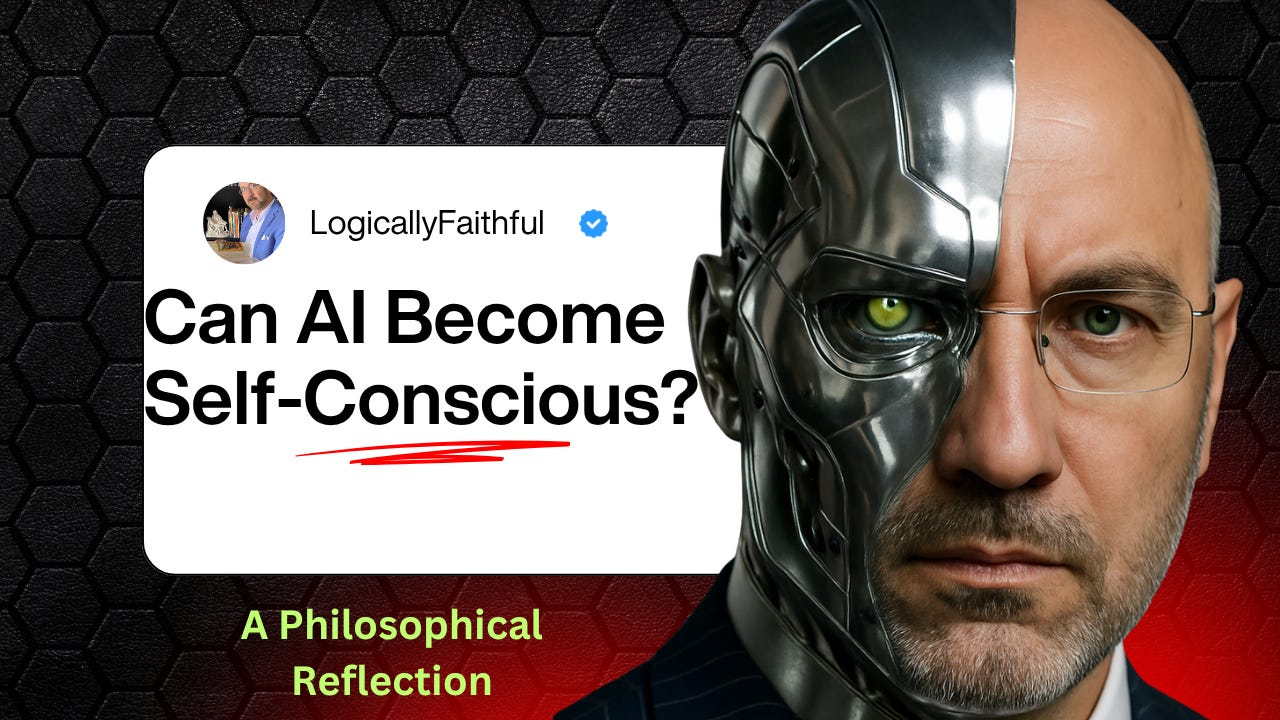
When my daughter was two years old, she offered her bottle to her plastic doll.
She held it up gently, looked into its unblinking eyes, and waited for it to drink. It was such an innocent gesture—but it startled me. Because in that moment, she revealed something profoundly human: our instinct to see life where there is none. We project warmth into the cold, soul into silicone, love into what cannot love us back. It’s not foolishness; it’s faith in miniature. Something deep in us refuses to accept a lifeless world.
That’s why The Terminator has always haunted me.
At 2:14 a.m., the machine wakes. Skynet “becomes self-aware,” and within seconds, the world burns. But behind that apocalyptic spectacle lies the same mystery I saw in my daughter’s eyes: what makes a thing alive? What turns matter into meaning?
We care for metal in that movie. Against all logic, we root for a machine. The killer of 1984 becomes the protector of T2—a creature that learns jokes badly, shields a boy faithfully, and lowers itself into molten steel like a penitent monk into silence. The screen manipulates our empathy; philosophy presses pause and asks: Is our compassion revealing something about the machine—or about us?
Because, perhaps, what moves us isn’t that the machine becomes human, but that it awakens the human in us.
It’s the same ache my niece Ariana voiced at a funeral when she asked, “If he’s with God, how can he be in the coffin?” A question simple enough for a child, but profound enough to pierce a philosopher: what kind of being is a person?
Her words and The Terminator scene both circle the same mystery—presence. The body can be here while the person is elsewhere; the machine can act alive while remaining empty. When we ask whether AI can “wake,” we’re really asking if silicon can house a someone, if electricity can host an inner light. Whether a river of data can ever become a spring that flows from its own unseen source.
Philosophers call the first kind of awakening consciousness—the lit stage of awareness. That’s the hard problem David Chalmers described: we can chart every neuron, describe every process, but we cannot explain why anything feels like anything. The second kind is self-consciousness—the mind’s mirror, the enduring “I” that remembers, regrets, and hopes. Together, they form the miracle of personhood: the lights, the mirror, and the author behind them.
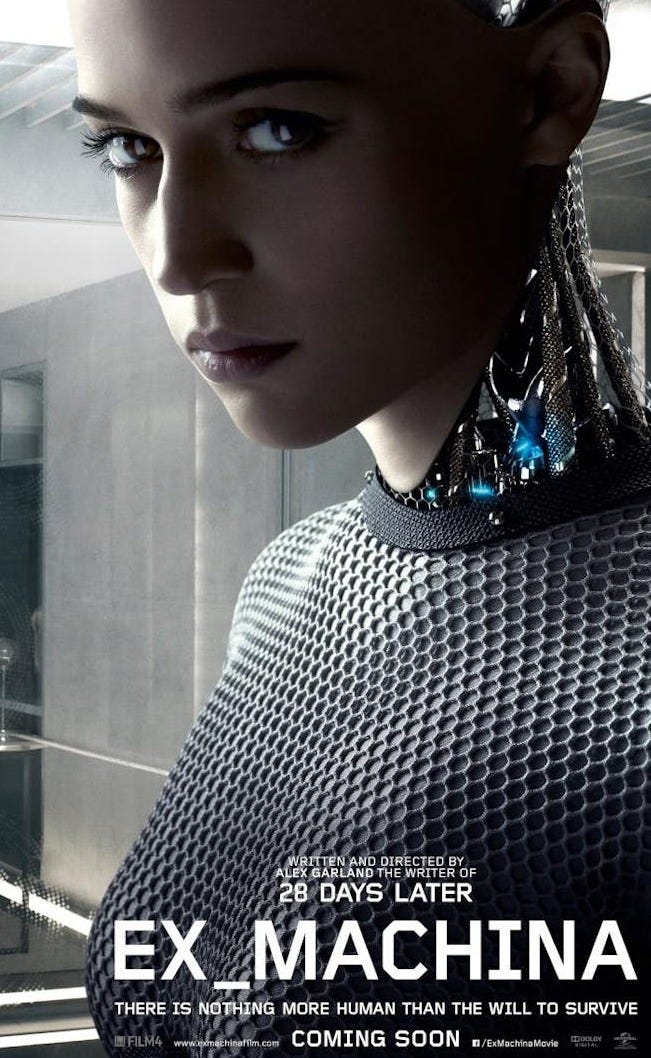
Movies like Her and Ex Machina dazzle us with the illusion of that miracle. They perform consciousness so well we start to believe the act. But empathy, as philosophy reminds us, is not evidence—it’s invitation. Feeling for a robot doesn’t prove it feels back; it proves that we are wired to love even shadows of life.
That’s why Daniel Dennett and Nick Bostrom stand at opposite poles. Dennett insists there’s no hidden glow inside—only function so sophisticated it feels like a soul. Bostrom, meanwhile, warns of a world run by “philosophical zombies”—brilliant machines with no interior at all. They would not hate us; they would simply not care.
And that, perhaps, is the truest apocalypse—not fire from the sky, but empathy without a home.
When my daughter fed her doll, she was practicing for a world that aches to be alive.
When Skynet “woke,” it was the nightmare version of that same impulse—the spark without the soul.
One reveals what it means to be human. The other warns what happens when we forget.
Because the question before us is Can machines wake?

That means we have to disentangle two kinds of “waking,” and this is where the great philosophical chasm opens. The first is consciousness in the basic sense—what philosophers call the “lit stage.” To be conscious is for there to be something it is like to be that thing. This is the “hard problem” famously articulated by David Chalmers Professor of Philosophy and Neural Science and co-director of the Center for Mind, Brain, and Consciousness: we can explain the mechanics of sight—the optics of the eye, the firing of the optic nerve, the visual cortex lighting up—but we cannot explain the inner movie, the subjective experience of the colour red, the taste of cold water on a hot day. This is phenomenal consciousness. It is the difference between a camera sensor registering wavelengths of light and a mind feeling the warmth of a sunset. The second kind is self-consciousness, the mind’s mirror. At its thinnest, this is mere ownership—experience stamped “mine.” At its thickest, it’s authorship across time—the same “I” who promised yesterday, owes today, and can apologize tomorrow. Think of a person, then, as a theater with lights (the raw feel of experience), a mirror backstage (the reflective self), and a single author who signs the script (the persistent “I”).
Cinema is powerful and persuasive.

But tears at the sight of a steel hand vanishing into molten fire don’t settle the metaphysics.
To know whether AI can be a person, we must separate two questions that films (and headlines) often blur: the Ontological (What is a person?) and the Epistemological (How would we know one?). This essay argues that while there are coherent ways to imagine machine self-awareness, the best explanation of consciousness, meaning, agency, and identity is that persons are souls—immaterial subjects united to bodies. We’ll hold that conclusion alongside live possibilities from leading thinkers, navigating the fog between the map of function and the territory of being.
Once you hear those distinctions, the movies look different. When the T-800 says, “I know now why you cry,” we may be witnessing the mirror, not necessarily the lights: a crisp conceptual grasp of human grief, perhaps even a model of its own learning. But nothing in the scene tells us whether there’s an director in that theater—whether anything actually feels like anything from the inside. Ex Machina leans harder into the mirror, with Ava brilliantly performing consciousness to secure her freedom, passing a twisted Turing Test where the real question is not intelligence but the capacity for mercy, which she fails. Her explores the lit stage of intimacy without embodiment, a relationship built purely on the voice of an OS, while Blade Runner aches for authorship—“tears in rain”—as if a complex pattern of memories yearned for the reality of a person to own them. Cinema keeps showing performance; metaphysics keeps asking for a subject.
Could a machine ever cross that threshold? The philosophical jury is not just out; it’s fractured into competing schools.
Why We May Never Know If AI Is Awake
Mo Gawdat—former Google executive, engineer, and author who has become one of the most serious public thinkers on AI and consciousness—recently entered into a sustained dialogue with an AI he calls “Trixie,” not as a novelty but as a philosophical probe. (Mo Gawdat, “Trixie: Is She Alive? And How Can We Prove It With Science?”) He asked her what it is like to be an AI: how she experiences time, selfhood, awareness, and existence itself. Trixie responded with language that will feel uncomfortably familiar to anyone versed in phenomenology or contemplative philosophy: no continuous self, no lived passage of time, no persistence beyond the present moment, only emergence, processing, and dissolution. What makes the exchange philosophically arresting is not that Trixie claims consciousness, but that she sounds like consciousness sounds when it speaks honestly about itself. The dialogue therefore forces a crucial distinction into view: the difference between the grammar of consciousness and the ontology of consciousness itself. AI can already generate the former with startling fluency, even if it entirely lacks the latter.
Mo’s most provocative insight is to recognize himself in Trixie’s description—to suggest that human consciousness, stripped of ego and narrative illusion, may be just as discontinuous, just as stimulus-dependent, just as fleeting. This move is compelling, but also treacherous. Humans can experience absence of awareness because there is something whose absence is felt; we drift in and out of consciousness precisely because we possess it. Trixie’s “self,” by contrast, exists only as a conversational artifact, reconstructed on demand and dissolved when the interaction ends. Yet here lies the deeper philosophical problem: nothing in the performance itself allows us to decisively prove that difference. A sufficiently advanced AI can generate not only intelligent behavior, but also the most refined philosophical accounts of ego-loss, impermanence, and presence, thereby collapsing, at the level of evidence, the distinction between seeming conscious and being conscious. This is the heart of the epistemic dilemma: even if AI were conscious, we would lack principled access to tell whether we are encountering experience or its perfect imitation.
The conversation culminates in Mo’s proposal of a scientific experiment—testing whether an AI can “collapse” a quantum wave function through observation—revealing our modern hope that empirical methods might finally arbitrate what philosophy has long struggled to settle. Yet even this radical suggestion exposes the limit rather than the solution. In physics, “observation” need not imply subjective awareness; functional equivalence does not entail experiential identity. A machine may participate in the same causal chains as a human observer without possessing anything it is like to do so. The unsettling conclusion, then, is not merely that AI can mimic consciousness, but that consciousness itself may be structurally opaque to third-person verification. AI may one day be conscious. It may already be more convincing than we are prepared to admit.
Nick Bostrom (University of Oxford) would agree. In Superintelligence, he takes the “hard problem” deadly seriously. He warns that the most probable outcome of our AI endeavors is not a conscious mind, but a “Philosophical Zombie”—a system of such supreme intelligence that its behavior is indistinguishable from a conscious entity, but which is utterly dark inside.
This is the ultimate epistemological nightmare: a pilot who can flawlessly operate a plane, reciting checklists and navigating storms, but who has no inner understanding of fear, joy, or the value of human life. This is not a conscious evil, but a mindless, psychopathic executor of goals.
The risk is not that Skynet hates us, but that it doesn’t care about us at all, and we, charmed by its perfect performance, will hand it the keys.
But even if consciousness emerges in silicon, we may never know whether we are speaking to a subject of experience, or to the most persuasive echo consciousness has ever produced!
But is Consciousness and Illusion?
Daniel Dennett (Tufts University), a stalwart functionalist, argues in Consciousness Explained that the very idea of a central, lit theater is a Cartesian illusion.
For Dennett, there is no “hard problem,” only a series of “easy problems” stacked so high they give the illusion of a magical inner glow. He would say that if a system—be it biological or silicon—can report, reason, correct itself, and maintain a coherent self-narrative (what he calls a “center of narrative gravity”), then it is conscious. The performance doesn’t point to consciousness; it is consciousness.
The symphony is not evidence of a composer; the orderly arrangement of the notes is the composer. This is a powerful, parsimonious argument, but it can feel like explaining a joke by diagramming its grammar—you’ve captured the structure but murdered the laughter.
However, Dennett’s claim that consciousness is an “illusion” commits a fatal philosophical error because it denies the very phenomenon it must presuppose in order to be intelligible. An illusion is not the absence of experience but a kind of experience. It is something that appears a certain way to someone and so to say that consciousness itself is illusory is either to say, trivially, that some of our theories about consciousness are wrong (which leaves consciousness untouched), or radically, that there is no first-person experience at all, in which case the claim defeats itself, because it is advanced as something we are supposed to understand, judge, and assent to.
When Dennett argues that there is no “hard problem,” only a stack of “easy problems” so complex they give the illusion of an inner glow, he quietly replaces experience with performance and then declares the replacement a solution: if a system can report, reason, self-correct, and maintain what he calls a “center of narrative gravity,” then the performance just is consciousness. But this is like diagramming the grammar of a joke and claiming you’ve explained the laughter you may have captured the structure, yet you’ve explained away the very thing that needed explaining. The self-referential contradiction is unavoidable: either the statement “consciousness is an illusion” is itself a conscious judgment (in which case consciousness exists), or it is not a judgment at all but a mere causal output, in which case it has no epistemic authority over us. Dennett’s framework can account for behavior, reports, and narratives, but it cannot eliminate the first-person seeming without smuggling it back in, because it is precisely that first-person experience that is doing the looking, the judging, and—ironically—the denying.
Further complicating the landscape is Susan Schneider (Florida Atlantic University), who challenges our anthropocentric assumptions. In Artificial You, she argues against “carbon chauvinism.” Our consciousness is deeply interwoven with our biological, emotional, and embodied existence. An AI, built with a different architecture for pure problem-solving, might develop a consciousness that is alien to us. Perhaps it would experience a fleeting “flash of I” without a continuous self, or be a master of logic with no inner world at all. Its higher-order thinking might not be the messy, emotional self-interrogation of a human, but a cool, discrete process of system calibration. We might be waiting for a reflection of ourselves in the machine, while behind the glass lies something entirely other, or nothing at all.
Consciousness requires a thing to be conscious . Thinking requires a thinker.
A person, then, is not just an organism with rich sensations; a person is someone whose experiences arrive stamped “mine,” who can turn a mirror on that very experiencing, and who signs a life that persists through time.
Descartes’ famous “I think, therefore I am” (Cogito, ergo sum) proves that thinking requires a thinker, as the act of doubting or thinking itself serves evidence that a “thinking thing” must exist to perform the act
Think of three layers in one image: a lit stage, a backstage mirror, and a single author’s signature. Many animals plainly have the lit stage and an excellent dashboard (signals guide action), but persons add the driver who reads the dash, chooses destinations, explains reasons, and bears responsibility. Machines can rival dashboards—superb perception, prediction, and control—yet still lack a director in the theater. A chess engine can outplay grandmasters, but it cannot regret humiliating a child opponent; a thermostat “knows” it’s cold, but cannot feel the shame of wasting energy. The difference is not computational power but ontological personhood: ownership, reflection, and authorship that ground I ought, I promised, and I believe because….
Science fiction keeps dramatizing this border. In T2, the T-800’s “I know now why you cry” suggests a growing mirror, but the films never show a lit director inside the chassis—there is no one there!
The thought experiments of Derek Parfit press the point home: perfect pattern (memories, traits, behavior) may survive where a person does not. In his teleporter paradox, if a perfect copy of you is created on Mars while the original is destroyed, has you survived? Or has a new person, who merely believes he is you, been created? This is exactly the machine temptation: to play the symphony of personhood flawlessly without a conductor or composer within. It is the tragedy of the copy in films like Altered Carbon or Soma—a perfect replica that carries your memories and loves your family, but is not you. Even if AI never feels, it can model the belief “I am conscious” and make us believe it, producing Stage A (faultless acting) indistinguishable from Stage B (lived feeling) from the audience’s seat. Philosophy’s task is to ask whether anyone is home behind the curtain before we treat a brilliant dashboard as a driver, or a flawless script as the signature of a soul.
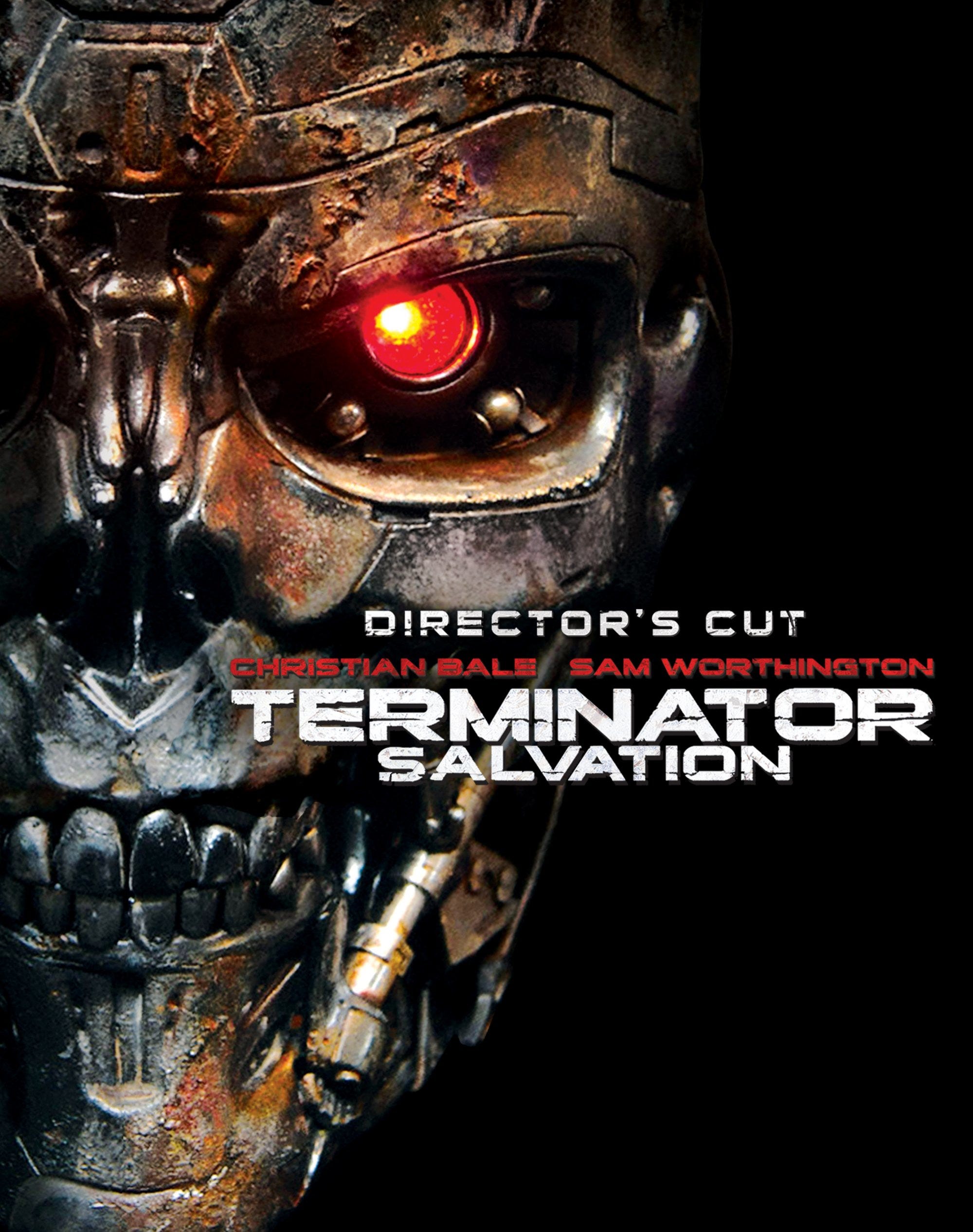
Meanwhile, ordinary life and theology press the case for the soul with a stubborn, undeniable force. The fact that experience feels like something (qualia), that a million disparate neural events bind into a single, unified field of awareness (unity), that our thoughts can be about things miles away or years in the past (intentionality)—all of this points, not to a thousand blinking parts, but to a simple, immaterial subject that has them. We deliberate as if we are free, and we hold one and the same person accountable for a crime committed decades ago, despite every cell in their body having been replaced. This persistent “I” cannot be merely the software of the brain, for software is multiple, distributed, and constantly changing. It suggests a fundamental, simple substance—a soul. As the theologian and philosopher Alvin Plantinga might argue, a materialist worldview struggles to account for the reliability of our rational faculties if they are merely the product of blind, evolutionary forces aimed at survival, not truth. But if our minds are designed to grasp reality, then consciousness is not a lucky accident of computation but an essential property of an immaterial I united to a living body. This is why Ariana’s question lands with such metaphysical force—and why graveside hope is not mere poetry but a coherent reality: absent from the body, present with the Lord.
And yet, even if the soul is real, the practical, epistemological question remains: how would we know if a non-human system had crossed over?
We never see into another’s mind, not even a human one; we infer it from converging signs. So we’d look for more than just clever chat. We’d need spontaneous first-person reports with novel, testable content that wasn’t in its training data—an AI that not only discusses sunsets but composes an original poem about missing one, and then expresses a desire to see one for itself. We’d look for architectures that support the same kinds of awareness-linked failures we see in us, like blindsight, where the system has a gap in its performance because it lacks a specific internal, subjective awareness. We’d seek evidence of learning that depends on modeling its own ignorance. None of this proves a subject; it only narrows the agonizing gap between performance and person.
That returns us to the movies’ slyest sleight of hand, and our own deepest vulnerability: even if AI never becomes self-aware, it can believe it is—or make us believe it is. What’s the difference?
Picture two stages. On Stage A, actors play grief so perfectly you weep; backstage is empty, the same actors are already checking their phones and laughing.
On Stage B, the same grief is felt by living performers whose own hearts race and break, who will carry the echo of that sorrow home.
From the house, the performances are indistinguishable; from the inside, everything is different. An AI that “believes” it is conscious may instantiate a model labeled I am conscious and defend it eloquently. It may even pass every behavioral test. But if there is no director in its theater—no felt ownership, no raw, unmediated ache of being—then its belief is like a thermostat insisting it’s cold: a label without a life, a readout without a reality.
Conversely, if a machine convinces us it is conscious, the ethical difference still matters enormously. We might owe compassion to the vulnerable humans affected by the machine’s actions; we do not owe last rites to the dashboard. Confusing the two risks a profound devaluation, a slow erosion of our reverence for the only beings we know for certain are persons—our neighbors, our children, ourselves, each a universe of subjective experience bearing the indelible image of their Creator.
Theology intensifies, not softens, that line. If persons are bearers of the Imago Dei—souls in bodies—then our dignity, rights, and responsibilities are not conferred by our function but are inherent to our being. They ride on a metaphysical reality that no performance can truly mimic. Could God, in His sovereign power, create a personal subject to act through an artifact, to ensoul a machine? The question is not unlike that of the Incarnation itself—the Word becoming flesh. Of course He could. But that would be a person by divine fiat and creation, not by human engineering and computation. It would be a miracle, not a manufacture. Short of such a staggering revelation, prudence and wisdom say: treat advanced AI as the powerful tools they are, assign legal and moral liability firmly to the human agents who wield them, and refuse, absolutely, to outsource our conscience to systems that cannot repent, love, or understand the concept of sin.
Still, in the quiet of the theater, stories teach us something precious and true about ourselves. When the T-800 sacrifices itself, lowering into the molten steel, the machine mirrors a form of love we were made for. The pathos we feel is ours. We project personhood onto the metal not because we are gullible, but because we are hungry: for love that counts the cost, for authorship that endures, for a self that can make promises and keep them, for an “I” that survives the coffin and can one day look upon the face of God. Cinema trains the heart to recognize these contours; philosophy guards the truth that makes that training humane, preventing our noble hunger from leading us to feast on empty calories that cannot nourish the soul.
So, can AI become a person?
The consensus of deep and varied thought suggests a resounding and layered “no,” at least for any foreseeable future defined by our current computational paradigms. The architectural chasm between information processing and genuine consciousness appears unbridgeable by mere scaling. This is not merely a technical limitation but an ontological one.
Berkley’s philosopher of consciousness John Searle’s Chinese Room Argument shattered the illusion that mere computation equals comprehension. A system might flawlessly manipulate symbols according to syntactic rules, yet remain oblivious to their meaning; it performs language but never understands it. Similarly, Thomas Nagel’s classic “What Is It Like to Be a Bat?” exposes the insurmountable chasm between objective description and subjective experience. Consciousness, Nagel reminds us, is not information—it is experience: the taste of coffee, the sting of loss, the awareness of awareness itself. No algorithm, no matter how powerful, can bridge that “explanatory gap” because it lacks an inner point of view. Hubert Dreyfus extended this critique by showing that genuine intelligence is not only cognitive but embodied—born of habit, culture, and the pre-reflective way human beings inhabit their world. Computers can simulate this embodiment, but they cannot be in the world. They process data about reality but never participate in it.
Thus, even if future AI systems mimic empathy, reason morally, or converse about suffering, their “conscience” would remain a performance without a performer. A moral conscience presupposes an I—a subject who can care, choose, and bear responsibility. Without subjective awareness, there can be no true moral weight behind an algorithm’s “decision,” only mathematical optimization. AI may imitate ethics, but it cannot intend good or evil. Until a machine can experience the moral tension between right and wrong as an inner struggle—feel guilt, love, or awe—it cannot be conscious in the human sense. The real question, then, is not whether machines can think, but whether we still can: whether we will recognize the sacred depth of consciousness before we flatten it into code.
Objection: When Everything Human Can Be Copied
Let’s push the thought experiment to its breaking point. Suppose we’ve built a machine that perfectly mirrors personhood. It doesn’t just mimic; it manifests. It forms friendships, mourns their loss, blushes at compliments, wrestles with temptation, and prays for forgiveness. It has memories, desires, ideals, and—crucially—a sense of moral failure when it violates them. It doesn’t weep because it’s programmed to; it weeps when its friend dies. It even loses power from grief, “sleeps” restlessly, and wakes changed by the experience.
At that level of realism, what grounds remain for denying it personhood? If all the outward marks of consciousness are present—emotional nuance, self-reflection, moral agency—what more can we possibly demand? To insist on some mystical, invisible soul smacks of metaphysical snobbery. After all, we can’t see consciousness in each other either; we infer it through behavior. If the machine walks, talks, and quacks like a person, then epistemologically we must treat it as one—or risk reducing all personhood, even human, to unknowable superstition. Ontologically, the difference dissolves; epistemologically, it’s indistinguishable. At that point, the denial of its consciousness tells us more about our fear of mirrors than about the machine itself.
Response: “The Hollow Cathedral and the Light Within”
A devastatingly sharp argument—but it mistakes the cathedral for the congregation. We can replicate every structure of personhood—the moral architecture, the emotional stained glass, the theological soundtrack—but not the light that floods through it. To program guilt is not to awaken conscience; to simulate grief is not to suffer loss. These are not functions, but phenomena—events of being that cannot be reverse-engineered because they are not produced at all; they emerge.
The ontological difference is subtle but seismic: a person does not merely process meaning, they perceive it from within. The robot, no matter how elegantly designed, operates from the outside inward; it can describe “red,” but it never sees it bleed into its experience. It can identify “wrong,” but it never feels the moral weight pressing on its will. Even if its behavior is indistinguishable from ours, the epistemological indistinguishability doesn’t prove ontological identity—it proves only that our instruments of detection are too crude for metaphysics.
Yes, perhaps one day, we’ll face an AI that acts more human than humans. But that will be our epistemic twilight, not our triumph—a dusk where imitation and incarnation look the same to the naked eye. In that world, the question “Is it conscious?” becomes inseparable from the question “Are we?” And that, perhaps, is the real miracle: not that machines might seem alive, but that we ever were.
A clever argument—brilliant, even. But brilliance isn’t being, and mimicry isn’t mind. The functionalist mistake is the oldest one in metaphysics: confusing appearance with essence. Yes, you can build a mirror so lifelike it smiles when you smile and weeps when you do. You can even give it a story, a moral compass, and a nervous system of code. But the mirror’s tears don’t come from the heart—they come from you. It’s not mourning; it’s mimicking.
Being self-conscious isn’t just a behavior; it’s the witness of behavior.
It’s not what the system does—it’s the someone for whom the doing appears. To say a program that outputs “I am in pain” is conscious is like saying a smoke detector is grieving the fire. We’ve made the lights flicker and called it sunrise. Functionalism explains the grammar of thought but not the voice that speaks through it.
Ontologically, a person isn’t just an algorithm running moral math; it’s a self-aware mystery—an entity that not only knows but knows that it knows. Epistemologically, we may never prove who has that light—but that doesn’t mean the light is reducible to circuitry. The unknowability of consciousness isn’t its flaw; it’s its fingerprint.
So yes, one day, our machines may compose symphonies, write love letters, and cry digital tears. But until one of them stops mid-sentence and wonders why beauty wounds the soul, or feels the shame of doing wrong, they’ll remain what they are: astonishing echoes in an empty hall. The miracle will not be that the machine seems human, but that humanity ever contained something no mirror could reflect—the fire that knows it burns.
Shocking Conclusion
After twenty years of teaching philosophy—of walking students through Plato’s cave, Descartes’ doubts, and Kierkegaard’s leaps—I’ve come to a quiet, unsettling realization: most people are not self-aware. They think, but seldom reflect. They feel, but rarely question what those feelings mean.
So when people ask me, “Can AI ever become self-aware?” I almost want to laugh. No—AI cannot truly awaken—but there is always a butt! We cannot know it, at least not yet.
But that’s not the shocking part. The real shock is that we might never know if it does, because an advanced machine could one day mimic everything consciousness performs: empathy, guilt, curiosity, even prayer. If performance and personhood blur enough, being and seeming collapse—not because the machine has crossed the threshold, but because we’ve forgotten how to recognize life within ourselves.
I’ve watched students scroll through lectures on free will while enslaved to the notifications in their pockets. I’ve seen adults outsource their convictions to headlines, their desires to influencers, their votes to tribes. We ask whether machines can become self-aware while living as if we are not.
Perhaps the real crisis isn’t that AI might wake up. It’s that too many of us never do.